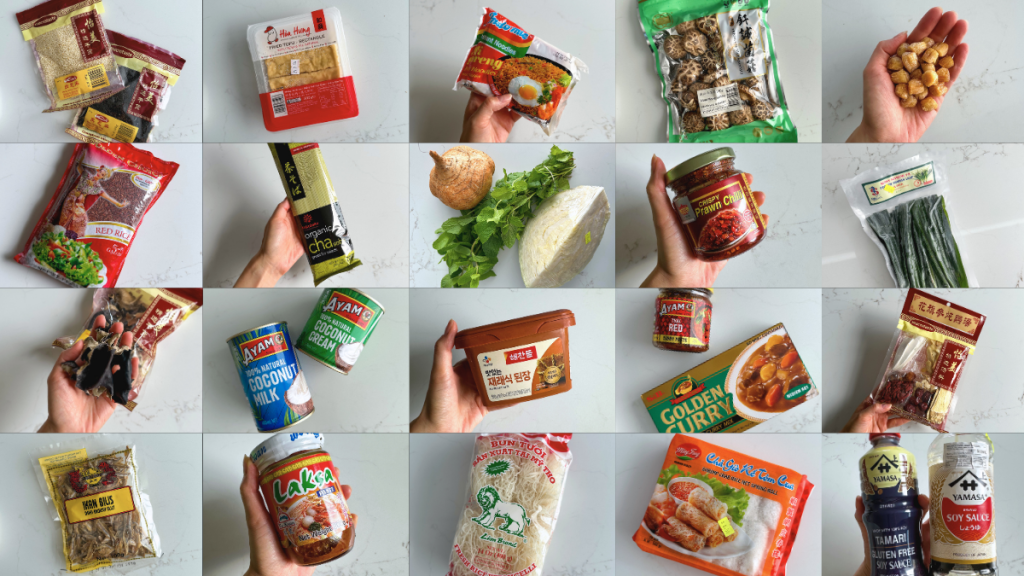
Living in Sydney is great when it comes to food and access to food from around the world. But it’s clearly not a budget-friendly city, and we’re all feeling the pinch in 2026 across all areas, including the weekly grocery shop. 😓
While I still visit the major supermarket chains like Coles and Woolies for my basic household staples, I also drop by a few Asian grocers for specialty items and cheaper alternatives to the big supermarkets. It’s a strategic way to elevate your home cooking while keeping your budget in check. For me, it’s all about variety, value, and discovery. Read on or scroll down for some of the usual things I’ll buy from my Asian grocer.
Why I love shopping at the Asian grocers in Sydney
It has more variety than bigger supermarket chains. Shopping at your local Asian supermarket gives you access to a massive range of authentic brands and regional staples from Asia and beyond – way more than the limited international aisles at big supermarkets. I grew up with certain brands that my family would use in Asian and Malaysian cooking, so it’s great when I can find these brands in Sydney.
You’ll find great bargains and cheaper alternatives. A lot of pantry essentials, fresh herbs, fruits and vegetables offer much better value for your money. But it also depends on your store – so make sure to compare prices! For me, I find that fresh herbs and particular vegetables are way cheaper (and more generous) than the bigger supermarkets.
It’s a whole new world! Who doesn’t love discovering new things? While I see a lot of Asian veggies, fruits, and food that I grew up eating, there are so many things that are also new to me, especially from other countries like Thailand, Korea, Japan, Vietnam – you name it. Whether it is a unique fruit or a handy kitchen tool you didn’t know you needed, every trip feels like a fun little trip right in your own city.
What I buy at the Asian supermarket
Here’s a guide on some essentials and unique things I buy from Sydney’s Asian grocers. From rice and noodle staples, to superfoods I’ve been eating since I was a kid – I hope this guide inspires you to explore your local Asian grocers, as well as your local fruit and veggie shops!
Rice and noodles
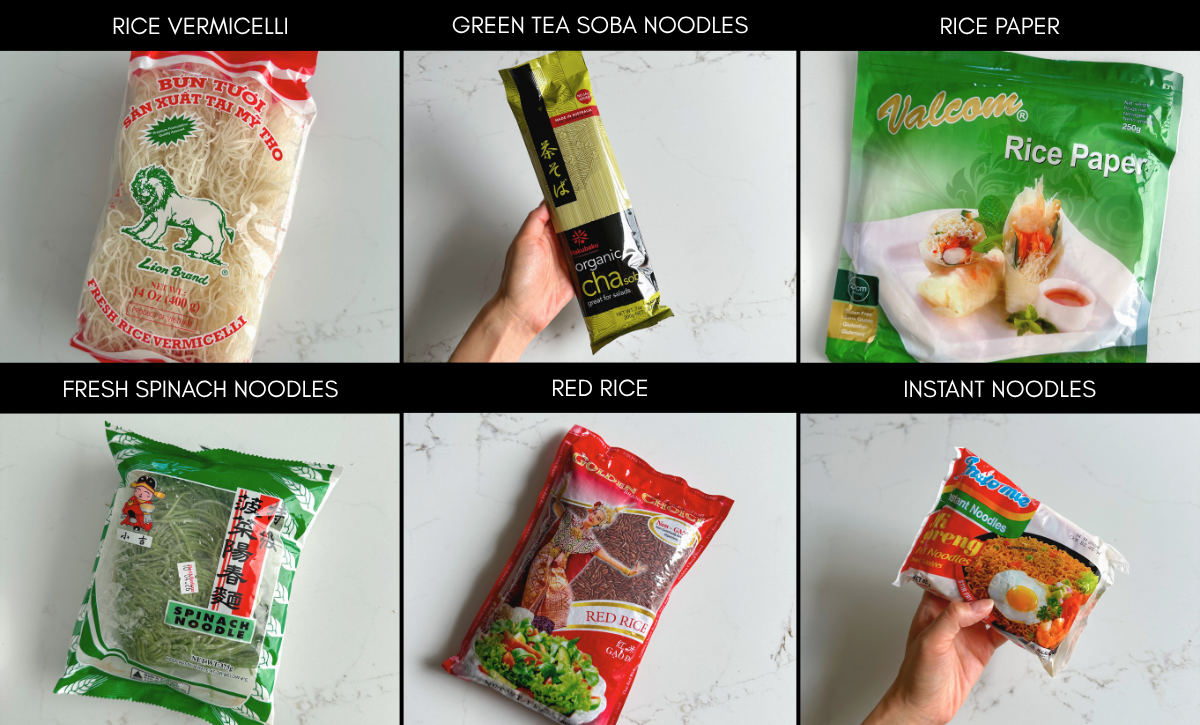
What I bought (clockwise from top left)
- Rice vermicelli: Great for Vietnamese noodle salads, rice paper rolls, and used in Laksa.
- Green tea soba noodles: My favourite to use for a quick Japanese tofu soba salad.
- Rice paper: A staple for rice paper rolls as a quick meal.
- Mi Goreng: If I’m being realistic, instant noodles still save me when I’m super busy and just want a quick meal. Mi Goreng is a classic, but there are so many other brands and flavours to explore from Hong Kong, Korea, and Japan. For example, the Nong Shim Chapaggeti (black bean sauce noodles) are rich and delicious as a quick dinner.
- Red rice: Fluffy and nutritious, make a red rice and quinoa blend for a healthier rice option that is also delicious in salads.
- Fresh spinach noodles: I discovered these a month ago in the fridge and they’re a nice alternative to fresh egg noodles. Great to add into noodle soups, and I love the green colour!
Rice and noodles are foundations in many Asian homes. So it’s a given that you’ll find a big variety of these at your local Asian grocer. Even though my list is a little unique, don’t forget the classics like jasmine rice, brown rice, long grain rice, sushi rice, etc. Plus, noodles also include the Taiwanese wide noodles used in scallion oil noodles, rice noodles, egg noodles and more.
Asian sauces, curries, and pastes
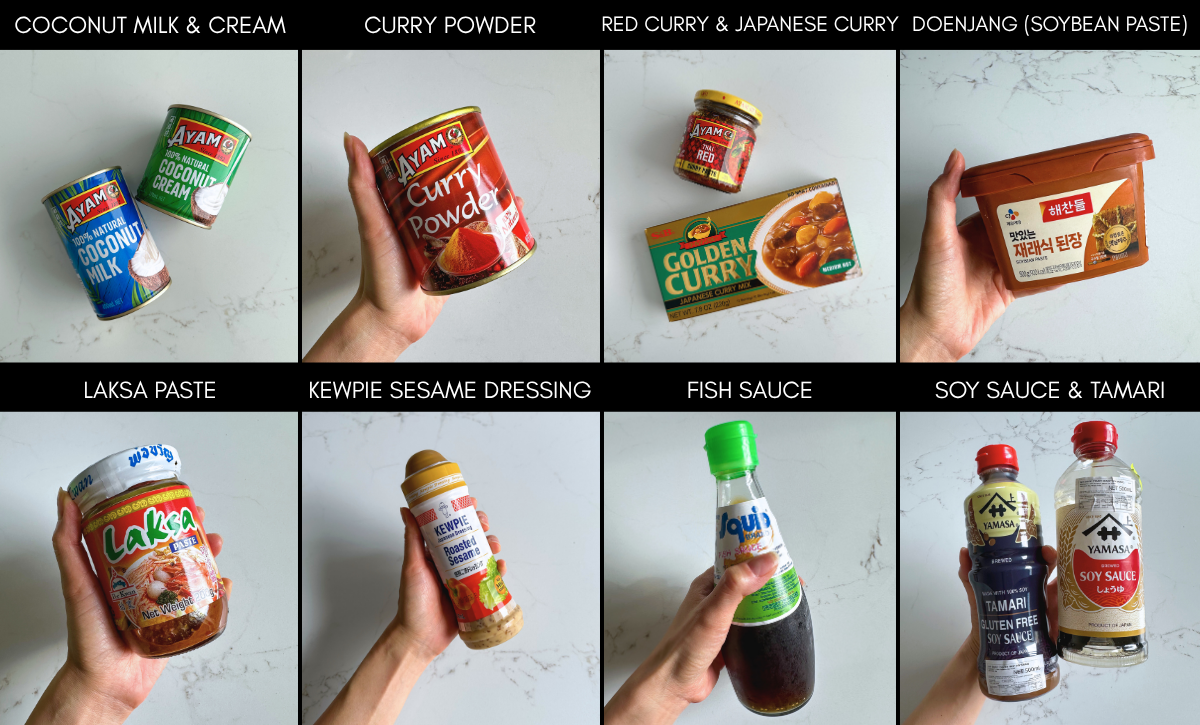
What I bought (clockwise from top left)
- Coconut milk and coconut cream: I buy Ayam branded coconut milk and coconut cream from my local Asian grocer, because they’re a little cheaper compared to the big supermarket chains. The good thing about this particular Ayam brand is that it’s 100% natural without any preservatives or additives. Both are staples for curry dishes as well as dairy-free drinks and desserts.
- Curry powder: I love this Ayam branded powder, because it also doesn’t have any preservatives and additives. Even though I have Keen’s curry powder at home, I use this Ayam brand curry powder when I want a flavour that reminds me of South East Asia.
- Red curry paste and Japanese golden curry: Thai red curry is a staple in my kitchen – I love that it’s flavourful without being too spicy like the green curry. It also works well as a quick sauce mixed with some peanut butter and coconut milk. I like to buy the medium-spiced Japanese curry for those nights when I want a comforting rice meal that’s quick. I usually cook the Japanese curry with carrots, onion and potatoes, and for protein – I stick to quick options like boiled eggs or even frozen battered fish and chicken schnitzels that I can throw into the air fryer.
- Doenjang: This Korean soybean paste is similar to miso paste but not the same! I use this paste to make my own version of Doenjang-jiggae (soybean paste stew) with mushrooms, anchovies, dried scallops, and seaweed. I also love making creamy Doenjang pasta with lots of garlic and mushrooms for a fusion umami flavour.
- Soy sauce and tamari: Soy sauce are staples in Asian/Chinese cooking. I add a teaspoon of soy sauce to my Malaysian half boiled eggs in the morning, as well as in stir fries. Tamari is a good gluten-free version of soy sauce, which can be used in the same way.
- Fish sauce: Don’t be afraid of fish sauce! It may smell intimidating on its own, but a few drops into a red curry or fried rice just transforms the flavour in a way that you’ll never look back. This is seriously liquid gold. I also like this ‘Squid brand’ fish sauce because it’s not too overpowering and doesn’t stink up my fridge.
- Kewpie roasted sesame dressing: I think it’s safe to say we all love Kewpie mayonnaise and dressings! I use this dressing for my quick tofu soba salads along with the green tea soba noodles.
- Laksa paste: When I’m craving something a little spicy, this laksa paste is super delicious. It’s also recommended by Nagi from Recipe Tin – and I trust any tip from Nagi!
Umami flavours and wellness foods
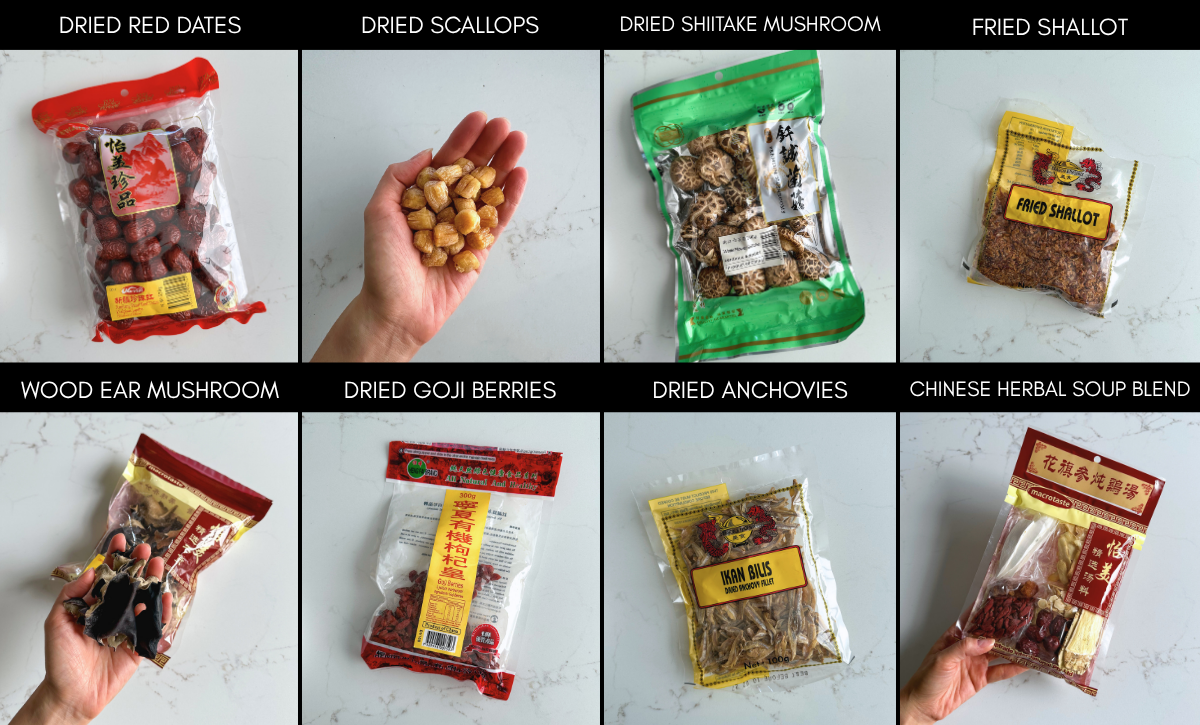
What I bought (clockwise from top left)
- Dried red dates (jujubes): Red dates are nutrient-dense and used in a lot of Asian/Chinese meals and medicines. It’s high in antioxidants, vitamin C and fibre. I use these in Chinese herbal soups, teas, Chinese dessert soups, and I like to make a monthly red date longan tea whenever I’m on my period.
- Dried scallops: These usually come pre-packaged or you can sometimes buy them by weight at certain shops. Dried scallops are a bit pricey, but a small amount goes a long way when it comes to adding them for stock. I usually just drop anywhere between 5-10 dried scallops into a soup or congee for that lovely savoury flavour.
- Dried shiitake mushrooms: There are so many different kinds of dried mushrooms at the Asian grocers – sizes, tastes, and quality. I like buying larger shiitake mushrooms and slicing them up myself if I need. I like the ones with a cracked, flowery pattern – they usually have a nice and mild umami flavour. Dried mushrooms go well in soups, sliced up in congree, and even sliced up in noodles and stir fries.
- Fried shallot: Not the healthiest, but a little sprinkle of fried shallot on top of dishes is great. They’re more than just a topping though – you can add a tablespoon for stock to congree and soups for that sweet, savoury taste.
- Pre-packed herbal soup blends: If you’re unsure what herbs or superfoods to buy, there are a lot of good pre-packed Chinese herbal soup blends. The one I have here goes well with some chicken, and it’s a blend that nourishes and ‘cools’ the body.
- Dried anchovy: Dried anchovies are another great ingredient to make stock. A few of these will elevate the taste of soups and congees.
- Goji berries: I grew up eating goji berries in our Chinese herbal soups and medicines, so it was interesting seeing them become a staple in cereals and smoothie bowls later on. If you don’t care where they’re from, you’ll find cheaper goji berries at the Asian grocery store over the supermarket chains.
- Dried wood ear mushroom: I love these ‘black fungus’ mushrooms. They have a crispy, elasticky texture that you either love or hate. Wood ear mushrooms need to be soaked beforehand and they’re great in stir fries, soups, fried noodles, and chop them up to add a nice texture to dumpling fillings.
Fresh produce and frozen goods
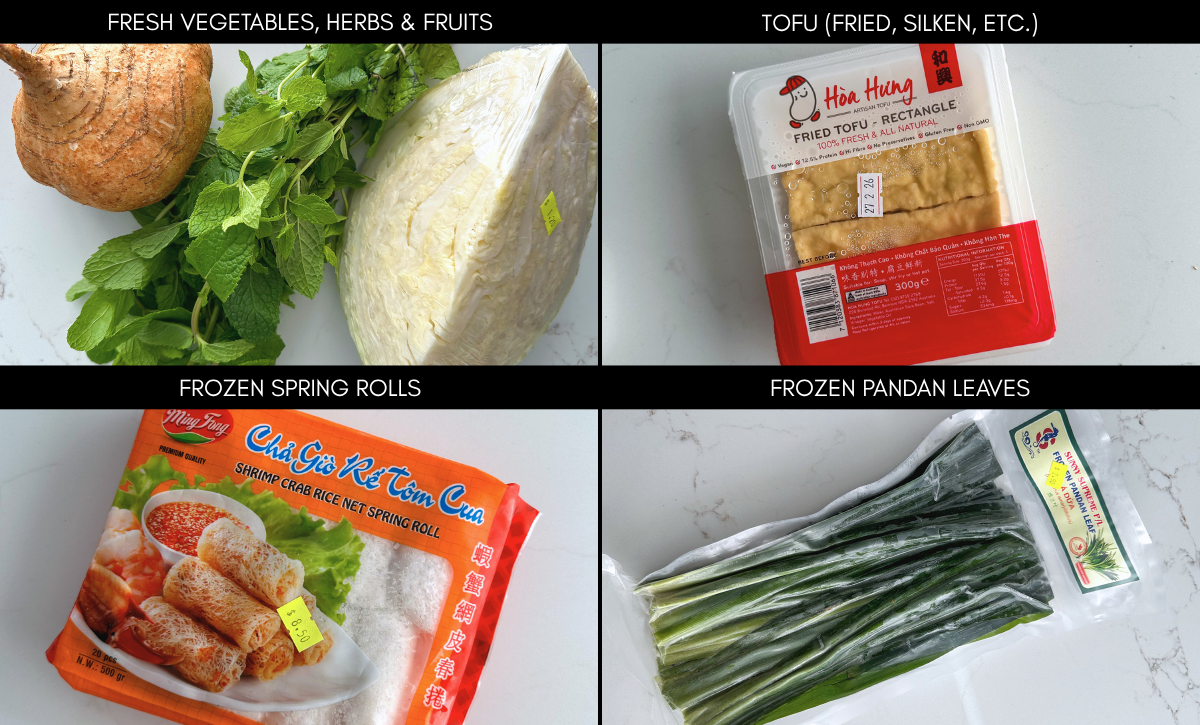
What I bought (clockwise from top left)
- Fresh vegetables and herbs: Some (not all) vegetables can be much cheaper at the Asian supermarket. On top of that, you’ll usually find fresher varieties of Asian veggies like Bok Choy, Kailan (Chinese broccoli), Chinese cabbage, and my favourite that’s usually hard to find: Winged beans! In this photo, I’ve jicama (a staple in Malaysian cooking), fresh mint, and cabbage. I have found that herbs are generally cheaper at the Asian shops compared to the bigger supermarkets, so go and check them out!
- Fried tofu: Tofu is a weekly staple of mine. I add it to curry dishes, quick tofu soba salads, and also to noodles, and vegetarian rice paper rolls. I like the fried tofu, but there is also cold hard tofu and silkened tofu, which is delicious in soups and even desserts!
- Frozen pandan leaves: Pandan flavour is a must-have in South East Asia. I’m terrible at describing the flavour, but think earthy grass meets vanilla. You either love it or hate it. I grew up eating pandan flavoured cakes, jellies, kuih, and drinks too! There’s also a dish called pandan chicken where chicken pieces are marinated and wrapped in pandan leaves and then grilled. I haven’t made it myself yet, but it’s on the list to try.
- Frozen spring rolls: Another not-so-healthy item, but hey, all in moderation right? I love these shrimp and crab spring rolls as a snack once in a while, or in a Vietnamese noodle salad. The instructions say to deep fry, but I simply brush olive oil on them and air fry (turning sides a few times). They come out just as crispy!
Finishing touches
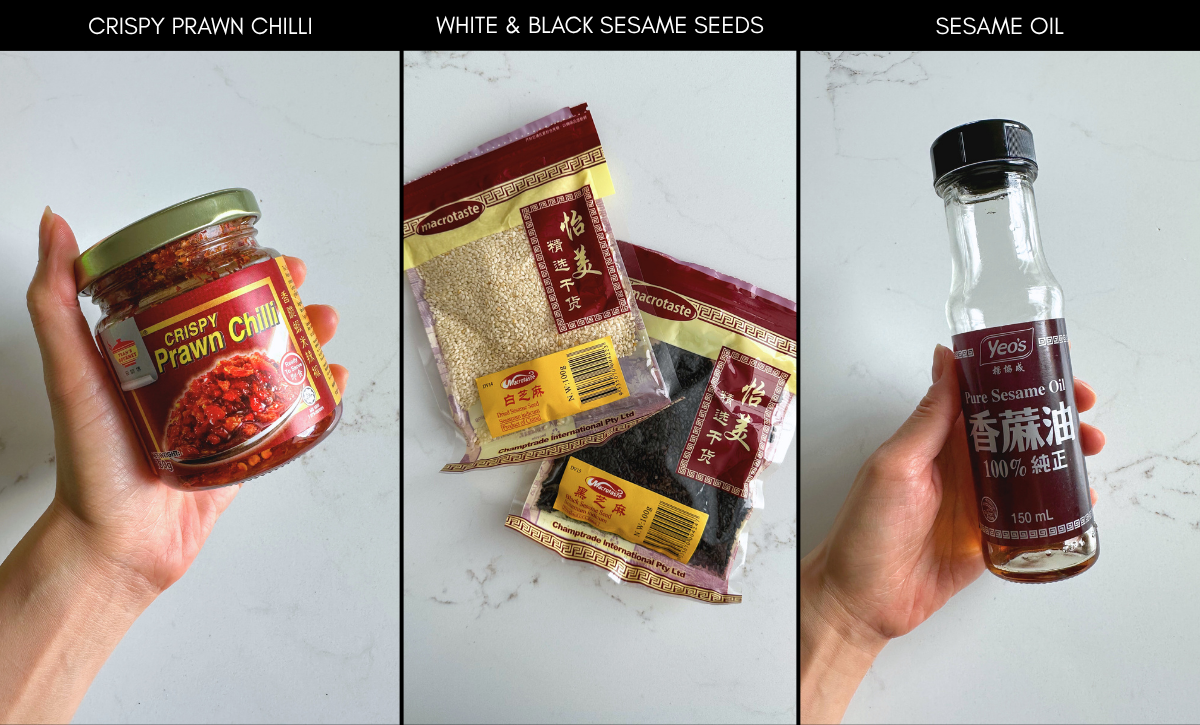
What I bought (from left to right)
- Crispy prawn chilli: Move over, lao gan ma. I personally think this crispy prawn chilli oil is NEXT LEVEL. But it could be my Malaysian tastebuds that are slightly biased. It’s sweet, spicy, with a savoury shrimp taste – add this on top of anything like scrambled eggs, fried rice, fried noodles, congee, and it’s a flavour bomb.
- Sesame seeds: Staples like sesame seeds can be pretty cheap at the Asian grocery store. I use white and black sesame seeds in different kinds of dishes including sesame crusted tuna steaks and sprinkled over simple garlic veggies.
- Sesame oil: I should have added sesame oil to the staple sauces, but I love drizzling sesame oil over final dishes like stir fries, congee, and over cold tofu as a side dish.
Asian dessert finds
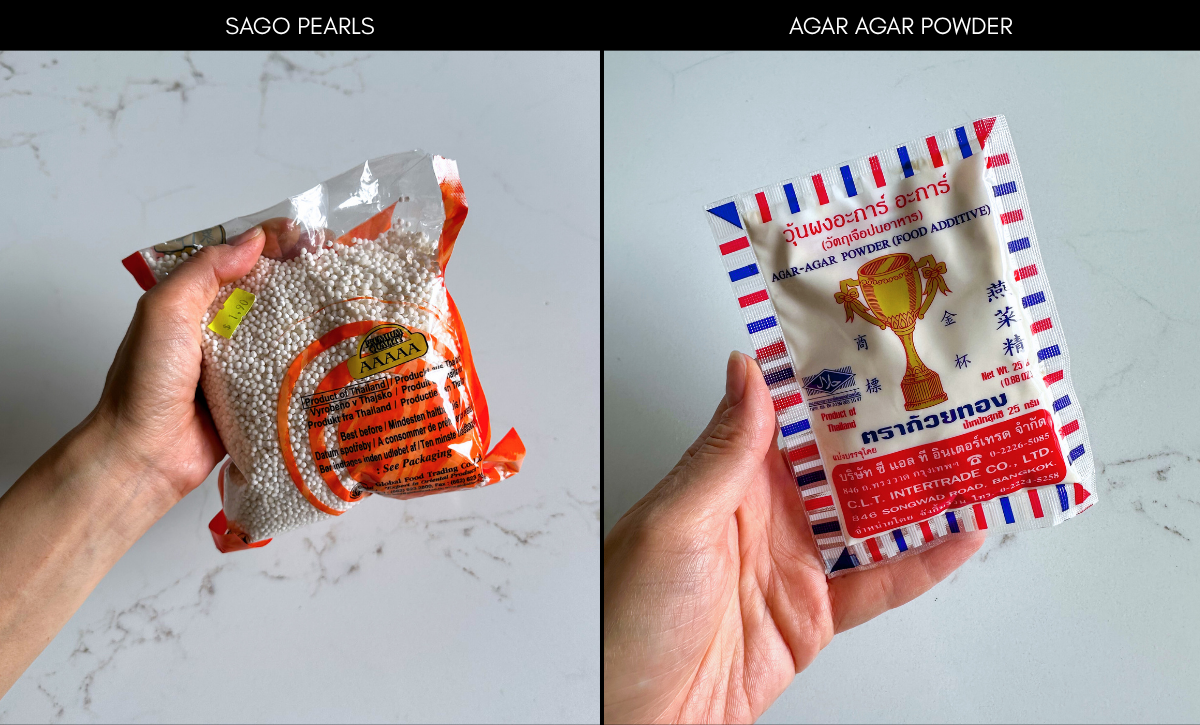
What I bought (from left to right)
- Sago: You’ll find sago in a lot of desserts across South East Asia. In Malaysia, we use sago in desserts like Bubur Cha Cha and Coconut Mango Sago pudding.
- Agar agar powder: Another dessert I grew up eating in Asia – agar! It’s the plant-based version of jelly, and honestly, I can’t tell the difference. As a kid, I loved pandan flavoured agar with lychees and longans inside. One thing I’d like to try making with agar powder next is coffee jelly inspired by the popular Japanese treat.
Where to shop: My favourite Asian supermarkets in Sydney
While you can find smaller grocers in almost every suburb, there are a few heavy hitters that I return to time and time again. Whether you are looking for a massive variety in the CBD or a specific regional specialty in the suburbs, these are my top recommendations for your next grocery run.
1. Sydney CBD: Thai Kee IGA Supermarket (Haymarket)
If it’s your first time shopping at an Asian grocer, Thai Kee IGA in the Market City building is the gold standard. It is a massive one stop shop with dedicated aisles for almost every region in Asia.
- Why it’s a winner: The variety is unmatched. You will find everything from fresh produce and frozen staples to a fridge section featuring locally made cakes with delicious Asian flavours like pandan, taro, and matcha.
- Tip: Since it’s located in the same building as Paddy’s Market, you can make a day of it. Hit Paddy’s for your bulk fruit and veg, then head upstairs to Thai Kee for your specialty sauces and pantry items.
2. Inner West Sydneye: Kung Fu Grocery (Hong Phuoc Two)
Located on Illawarra Road in Marrickville, this is my absolute favourite local gem. Surprisingly, it doesn’t have the highest Google reviews, but I never rely on star ratings when it comes to Asian shops and food…
- Why it’s a winner: This is my go to for fresh herbs, garlic, and leafy greens. It is usually my first stop before checking out the other two grocers nearby.
- Tip: If you are in the Inner West, Marrickville is a powerhouse for Vietnamese restaurants, banh mi and ingredients. Kung Fu Grocery is consistent, generous with herb portions, and always well priced. Make it a day – grab some lunch, snacks, and shop around.
3. Western Sydney: KMALL09 (Lidcombe)
For fans of Korean cuisine, KMALL09 in Lidcombe is an essential destination. It not just grocery store, it’s also a foodie experience!
- Why it’s a winner: Beyond the fresh produce, the prepared food section is incredible. You can pick up freshly made gimbap (Korean style sushi) and japchae (potato starch noodles), or browse the stalls selling hot Korean street food like fish cakes and rice cakes.
- Tip: This is the place to go if you want to explore Korean “Discovery” items. Their freezer section is vast and perfect for stocking up on dumplings and marinated meats.
Start exploring beyond the big chains
The beauty of living in a multicultural city like Sydney is that we have access to a world of flavour right on our doorstep. While the major supermarkets are convenient, stepping into your local Asian or international grocer, like the amazing Indian supermarkets in Harris Park, is the best way to spice up your pantry while supporting local businesses.
In 2026, being a savvy shopper is all about the “hybrid” approach. By combining your big supermarket shop with visits to these specialty stores, you get the best of both worlds: the staples you need and the authentic, high value ingredients you actually want.
So, next time you’re planning your weekly meals, skip the international aisle at the big chains and head to your local grocer instead. Your kitchen and your bank account will thank you for it.
 One More Foodie
Leave a comment